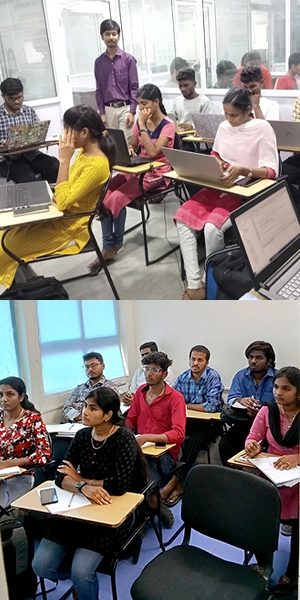
Businesses are now adopting Generative AI for tasks such as creating content, supporting customers, automating workflows, analyzing data, and developing software. As companies adopt tools based on large language models and other AI technologies, there is a growing need for professionals who understand how to build, use, and integrate these solutions.
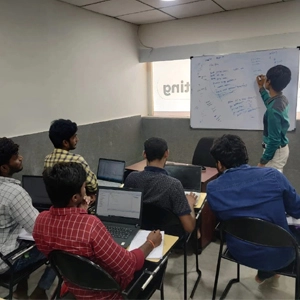
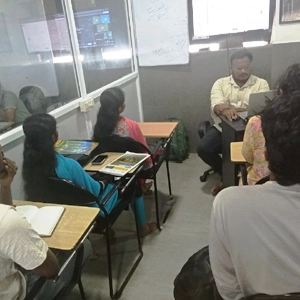
FITA Academy’s Gen AI Courses Hosur are designed to give learners practical exposure to technologies used in Gen AI projects. The training covers areas such as prompt engineering, LLMs, RAG, AI agents, workflow automation, APIs, and AI-powered application development. Students also work on practical assignments and projects to understand how these technologies can be used in real business scenarios.
“100% Placement Support after completing our Gen AI Course in Hosur.”
FITA Academy’s placement team helps learners prepare for the job search after training. Support includes resume preparation, portfolio guidance, mock interviews, interview practice, and assistance in identifying suitable job opportunities. The aim is to help students present their Gen AI skills and project experience confidently during interviews.
As Gen AI is closely connected with machine learning, students who want to strengthen their knowledge of AI models and predictive techniques can also explore our Machine LearningCourse. This can be useful for learners planning to build a broader career in AI and machine learning.
After completing the Generative AI Certification and Placement Training in Hosur, learners can explore roles such as:
- Generative AI Engineer
- Prompt Engineer
- AI Engineer
- RAG Engineer
- AI Automation Specialist
- AI Solutions Architect
- AI Research Associate
- AI Fine-Tuning Specialist
- AI Quality Assurance Tester
- AI Agent Developer
Generative AI Engineer
Generative AI Engineers build applications that use AI models to solve business problems. Their work may involve LLM APIs, embeddings, vector databases, RAG pipelines, prompt design, and integrating AI features into existing applications.
Prompt Engineer
Prompt Engineers create and test prompts to get useful and consistent results from AI models. They may develop prompt templates, improve model responses, and work with development or product teams to make AI applications more effective.
AI Engineer
AI engineers create features that are based on AI and add them to business and application systems. Depending on the job, they may use Python, LLMs, APIs, machine learning models, automation tools, and cloud platforms.
RAG Engineer
RAG Engineers create systems that let AI models get data from outside sources before they come up with an answer. Document processing, embeddings, vector search, chunking, retrieval, and frameworks like LangChain are some of the things they might do for work.
AI Automation Specialist
AI Automation Specialists use AI tools to make business tasks and workflows that are done over and over again run automatically. To cut down on routine work, they may link LLMs to CRM systems, business apps, databases, and automation platforms.
AI Solutions Architect
AI Solutions Architects plan how AI can be integrated into larger business systems. They select suitable models and tools, design the overall solution, and consider areas such as data flow, APIs, security, scalability, and cloud deployment.
For learners interested in deploying AI applications on cloud infrastructure, developing cloud skills can be a useful addition. Our AWStraining provides an opportunity to learn cloud services that can support AI application deployment and infrastructure management.
AI Research Associate
AI Research Associates work on experiments involving AI and generative models. They may test different approaches, evaluate model performance, prepare datasets, and work with technical teams on new AI applications.
AI Fine-Tuning Specialist
AI Fine-Tuning Specialists change AI models to work better with certain jobs or areas of study. It might be part of their job to prepare datasets, run fine-tuning experiments, evaluate model responses, and make model outputs better.
AI Quality Assurance Tester
AI Quality Assurance Testers make sure that AI programs give accurate and useful results. They make test cases, look at how the models respond, find problems like wrong results or hallucinations, and work with the development teams to make the system better.
AI Agent Developer
AI Agent Developers create programs that let AI agents do things like use tools, get information, and finish workflows with multiple steps. They might work with memory, calling tools, workflows, agent frameworks, APIs, and LLMs.
Career Growth After Generative AI Training
Generative AI offers several career paths, and the right role depends on a learner’s technical background and area of interest. Beginners may start with roles involving prompt engineering, AI application development, automation, or testing and gradually move into specialized positions as they gain project and industry experience.
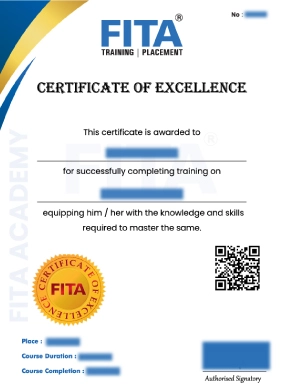
FITA Academy’s Generative AI Training in Hosur combines practical learning, project work, and placement assistance to help learners prepare for opportunities in the growing AI field. With experience in LLMs, RAG, AI agents, automation, and related tools, learners can build a portfolio that demonstrates their ability to work on practical Gen AI use cases.