Today, organizations use data to boost performance, understand their customers, and make better decisions. Because of this, skilled Data Analytics professionals are needed in many fields, including IT, banking, healthcare, e-commerce, manufacturing, consulting, and telecommunications. Companies of all sizes want people who are able to collect, analyze, and interpret data to solve business problems.
At FITA Academy, learning is not limited to the classroom. Eligible students get placement support, including help with resumes, interview tips, mock interviews, aptitude training, and updates on job openings. The placement team also helps students build confidence and improve their communication skills for the recruitment process.
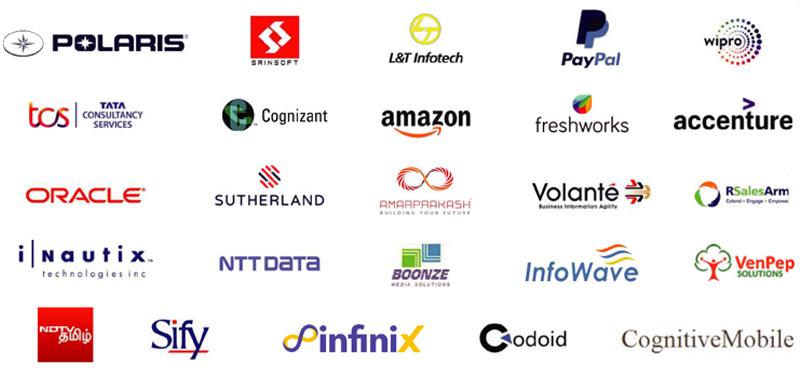
FITA Academy works with more than 3,000 hiring partners to connect eligible students with jobs at top companies in many industries.
“100% placement assistance is provided to our students until they land their dream job.”
After finishing the Data Analytics Course in Velachery, students can choose from several career paths that match their interests and skills, such as:
Data Analyst
Data Analysts gather, organize, and study data to spot trends and find useful insights. They use tools like SQL, Excel, Python, Power BI, and Tableau to help businesses make better decisions and improve performance.
Business Analyst
Business Analysts use data to understand business needs, find ways to improve, and suggest practical solutions. They work with different teams to help with planning, improve processes, and achieve business goals.
Data Engineer
Data Engineers create and manage reliable pipelines that support the collection, storage, and processing of large-scale data. They make sure the data is accurate, easy to access, and ready for analysis by teams in the organization.
Business Intelligence (BI) Analyst
BI Analysts analyze data and provide it in meaningful reports using Power BI and Tableau. Their key findings help organizations to improve performance, follow key metrics, and make data-driven decisions. Finance professionals examine financial data, which supports budgeting, forecasting, investment planning, and overall operational growth
Data Governance Analyst
Data Governance Analysts help business establishments to keep their data accurate, secure, and well-managed. They create data standards, check data quality, and make sure rules and regulations are followed.
Marketing Analyst
Marketing Analysts study customer engagement behavior, marketing outcomes, and trends to measure how they perform. Their analysis helps businesses to connect with customers and make better marketing decisions.
Risk Analyst
Risk Analysts use data to find possible business and financial risks. They study trends, look at possible outcomes, and suggest ways for organizations to lower risks and make better decisions.