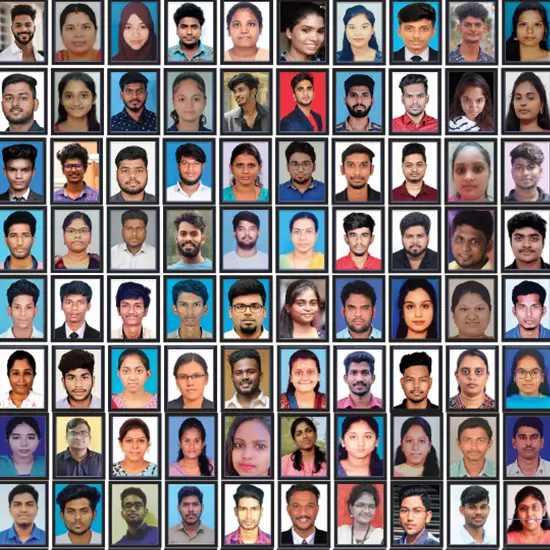
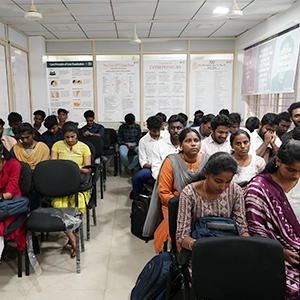
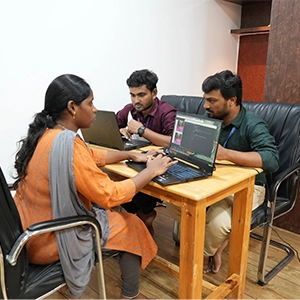
FITA Academy offers full placement support to help you during your job search. This includes preparing for recruitment and finding suitable opportunities. The placement team offers comprehensive support, including resume guidance, mock interviews, aptitude and Artificial Intelligence interview questions and answers, and personalized career counseling. The demand for AI skilled professionals continues to grow across different sectors. Such as software companies, healthcare organizations, financial institutions, manufacturing firms, retail businesses, automotive companies, e commerce platforms, cybersecurity firms, and other technology driven industries.
Freshers starting a career in AI can generally expect salaries ranging from ₹4 LPA to ₹7 LPA, based on their technical abilities, project experience, location, and specific job role.
“100% placement assistance is provided to our students until they land their dream job.”
Career Opportunities After Artificial Intelligence Training
The AI Training in OMR equips you with skills that can help you pursue different roles in Artificial Intelligence, including:
AI Engineer
Applications that rely on artificial intelligence to facilitate business procedures, automate operations, and analyze data are developed by AI engineers. Working with data, developing AI models, integrating AI elements into apps, and evaluating their effectiveness are some of their responsibilities.
Python is commonly used for AI development, along with frameworks such as TensorFlow and PyTorch. AI Engineers can find opportunities in software, healthcare, finance, manufacturing, automotive, cybersecurity, and e commerce.
Machine Learning Engineer
Machine learning engineers develop and maintain models that identify patterns in data and generate predictions. They can create datasets, choose algorithms, train models, assess outcomes, and enhance model performance. In this position, Python, Pandas, NumPy, TensorFlow, PyTorch, and machine learning libraries are frequently utilized.
Data Scientist
Data Scientists work with datasets to identify patterns and generate insights that can support business decisions. Their work may involve data preparation, statistical analysis, predictive modeling, visualization, and reporting. Python, Pandas, NumPy, SciPy, Machine Learning, statistics, and visualization tools such as Power BI can be useful for this career.
NLP Engineer
NLP Engineers create applications that process and interpret human language. They may work on chatbots, document analysis, text classification, virtual assistants, language processing, and search applications. Python, Deep Learning, NLP techniques, and Generative AI are commonly used in these projects.
Computer Vision Engineer
Computer Vision Engineers develop systems that work with images and videos. Their work may include image classification, object detection, facial recognition, image processing, and visual inspection.
Python, OpenCV, TensorFlow, PyTorch, CNN architectures, and Deep Learning are commonly used technologies in this field.
Robotics Engineer
Robotics Engineers combine programming, AI, automation, sensors, and Computer Vision to develop systems that can perform physical tasks. Their work may involve robot control, navigation, object recognition, and automated operations. Python, AI frameworks, Computer Vision technologies, and robotics platforms can be useful for this career.
AI Research Engineer
AI Research Engineers focus on studying and improving AI models, algorithms, and techniques. They may conduct experiments, train models, compare results, and explore new approaches to Machine Learning and Deep Learning. Python, TensorFlow, PyTorch, Machine Learning, Deep Learning, and Generative AI are commonly used in research oriented work.