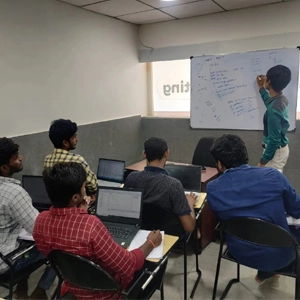
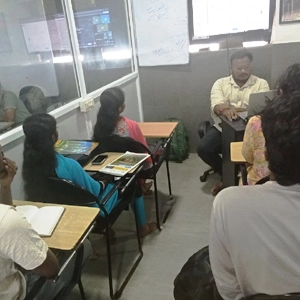
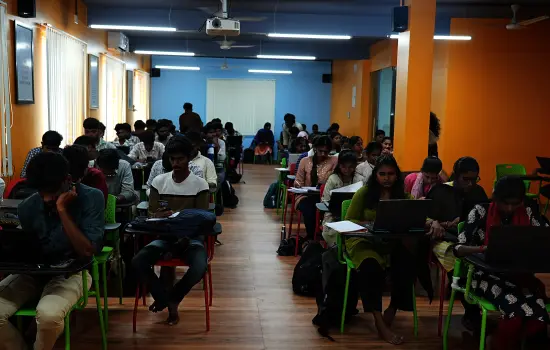
The Artificial Intelligence Course in Tambaram helps learners develop practical skills that are useful across industries such as healthcare, finance, cybersecurity, manufacturing, retail, education, automotive, logistics, and e-commerce. The course focuses on applying Artificial Intelligence to solve practical business problems rather than learning concepts alone.
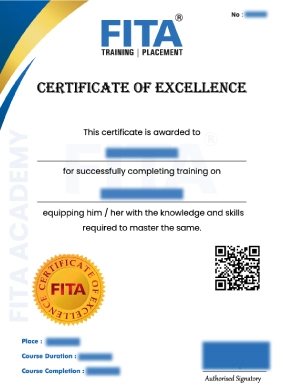
During the AI Training in Tambaram, learners receive placement assistance that includes resume preparation, aptitude practice, mock interviews, HR interview guidance, interview tips, and Artificial Intelligence interview questions and answers. Learning Python, Java, Power BI, Machine Learning, and Deep Learning also helps improve employability for AI related roles.
Many organizations, including IBM, Microsoft, Google, Amazon, NVIDIA, Oracle, Accenture, Infosys, TCS, Cognizant, HCLTech, and Adobe, recruit professionals with Artificial Intelligence skills for roles in AI development, Machine Learning, Data Science, intelligent automation, and software engineering. For learners looking for the Best Artificial Intelligence Training in Tambaram at FITA Academy offers training that covers the technical skills and tools relevant to these career paths.
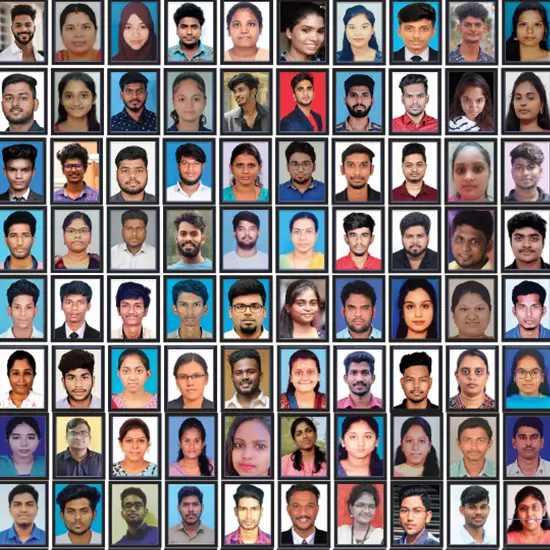
“100% placement assistance is provided to our students until they land their dream job.”
After completing the course, Freshers entering the Artificial Intelligence field can expect salaries in the range of ₹4 LPA to ₹7 LPA, depending on technical skills, certifications, project experience, company, and location.
AI Engineer
An AI Engineer develops Automation solutions that help businesses automate processes, analyze data, and improve decision making. They work with Python, Java, Machine Learning, Deep Learning, TensorFlow, PyTorch, and Generative AI to build AI powered applications across industries such as healthcare, finance, manufacturing, cybersecurity, and e-commerce.
Machine Learning Engineer
A Machine Learning Engineer builds predictive models that analyze data and become more accurate as they process new information. They use Python, TensorFlow, PyTorch, Machine Learning algorithms, and data processing techniques to build scalable AI applications for software companies, financial institutions, healthcare organizations, and technology firms.
Data Scientist
Data Scientists gather, organize, and analyze both structured and unstructured data to uncover insights that support business decisions. They use Python, statistics, Data Science techniques, SQL, Machine Learning, and Power BI to create predictive models, generate reports, and support decision making across industries.
NLP Engineer
Natural Language Processing (NLP) Engineers design AI systems that enable computers to read, interpret, and generate human language with greater accuracy. They work with technologies such as Python, Natural Language Processing, Deep Learning, and Generative AI to design applications for text summarization, speech recognition, email classification, question answering systems, and conversational AI used across customer service, healthcare, finance, and other industries.
Computer Vision Engineer
Computer Vision Engineers build AI systems capable of understanding and interpreting images and videos. They use Python, PyTorch, and deep learning approaches to develop applications for image recognition, facial recognition, object detection, and medical imaging.
Robotics Engineer
Robotics Engineers combine Artificial Intelligence, automation, Machine Learning, and Computer Vision to build intelligent robotic systems. They implement AI models for manufacturing, logistics, healthcare, aerospace, and industrial automation by integrating AI with sensors, embedded systems, and robotics platforms.
AI Research Engineer
AI Research Engineers focus on improving Artificial Intelligence algorithms and developing advanced AI models for emerging technologies. They work with Python, Machine Learning, Deep Learning, and Generative AI to solve challenging problems and contribute to innovations in research organizations, universities, and AI product companies.